Drainage & erosion · Charlotte
Standing water in your yard? Fix it before the fall rains.
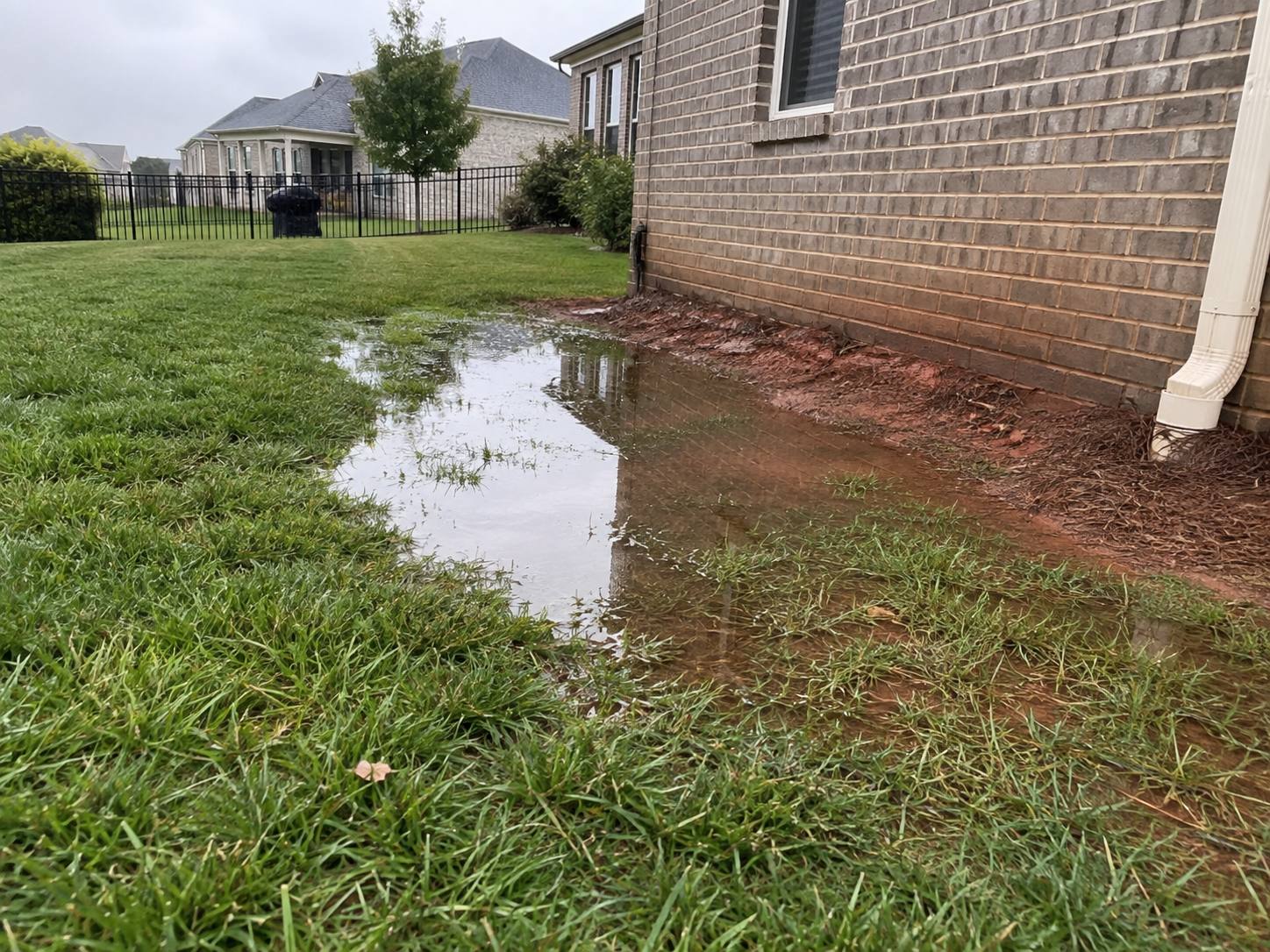
The soggy spot that never quite dries. The mulch that ends up on the sidewalk after every storm. The puddle that sits against the house for two days. Charlotte's red clay doesn't absorb water, it routes it, and every fall the rains find the same low spots again. Text us photos or a quick video of where the water goes and you'll get a free assessment and a straight written price for fixing it.
Prefer to talk? Call or text (704) 741-9798.
- Insured
- Locally owned
- Fast, friendly replies
- Serving Charlotte and surrounding areas

Justin, Owner
One text away
Real work, one person answerable for it
I've already found the best crews in south Charlotte. You just call me.
- Insured
- The owner answers
- No contracts
- Not right? We make it right, free
What we handle
Drainage & erosion solutions in Charlotte, NC.
Tell us what you need and where the property is. You'll get a clear quote and a spot on the schedule, all handled by one local team you get to know.
French drain design and installation
Downspout burial and extensions
Catch basins and channel drains
Dry creek beds and swales
Regrading and low-spot repair
Erosion repair and washed-out slope rebuilds
Bed and lawn restoration after the trench
Drainage planning for patios and hardscape
The fastest path to a fix: text photos or a 20-second video of the water while it's standing (or right after a storm). Wet-yard photos tell us more than a dry-day walkthrough ever could, and they're usually all we need to write you a real price.
This is home protection, not yard decoration. Water that pools against a slab or crawl space is working on the most expensive thing you own, and the cheapest drainage fix is always the one done before the ground saturates and the water reaches the foundation.
Why does my Charlotte yard hold water after every storm?
Because Charlotte sits on red clay, and clay does not absorb water so much as shed it. Rain that a sandy soil would soak up in an hour sits on top of our clay or slides along it until it finds the lowest point: the back corner of the lawn, the bed by the downspout, the strip along the foundation. That is why the same spots flood every time, and why waiting for the yard to 'dry out on its own' never actually fixes anything.
The fix is never to fight the clay; it is to give the water a better route than the one it keeps choosing. That is what French drains, buried downspouts, swales, and regrading actually do: they intercept the water where it collects and move it, underground or on the surface, to somewhere it can leave.
What fixes standing water: a French drain, a dry creek bed, or regrading?
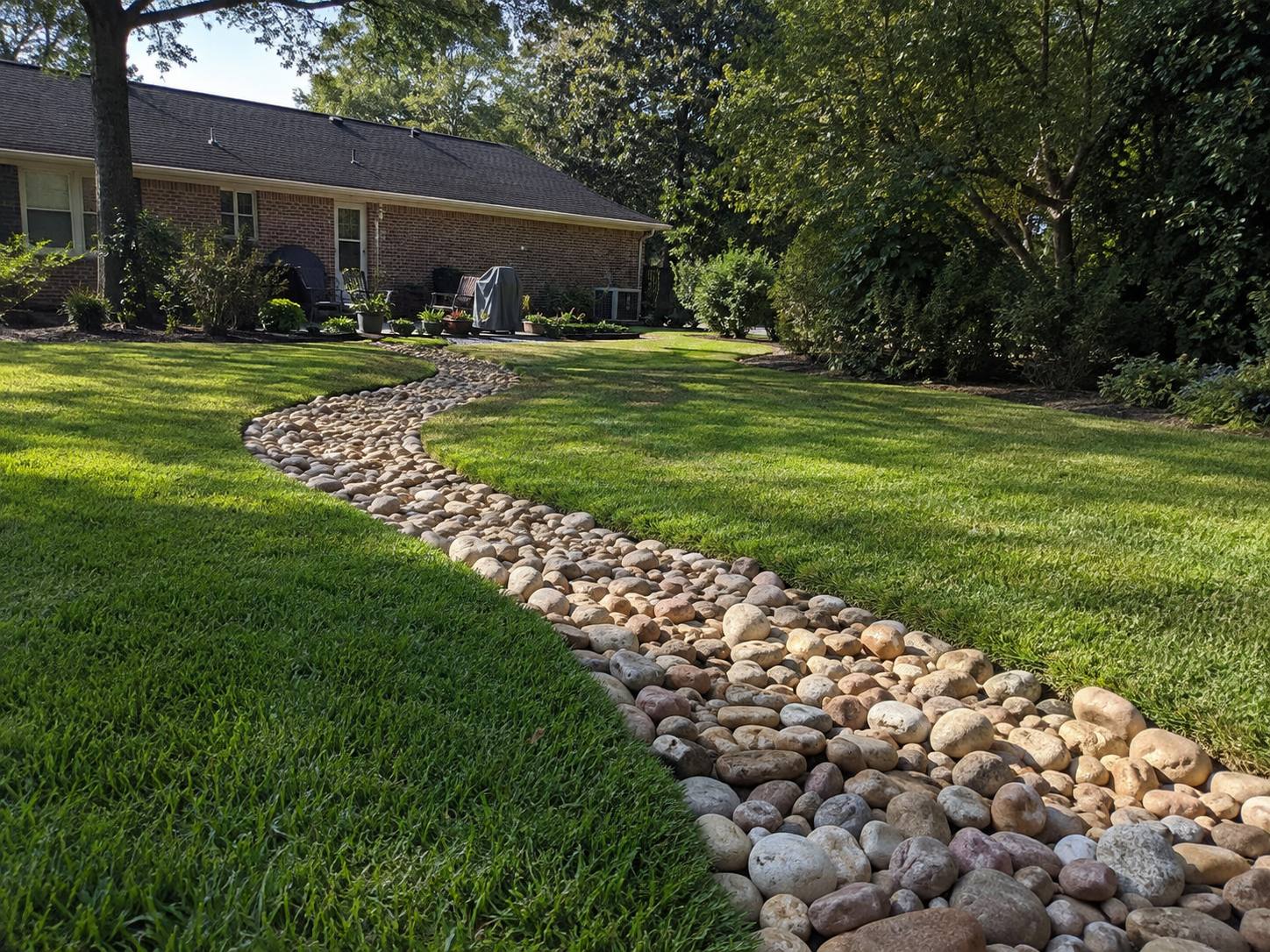
It depends on where the water comes from and where it can go, which is exactly what the free assessment sorts out. Water collecting below the surface along a soggy stretch of lawn wants a French drain: a gravel trench with perforated pipe that intercepts and carries it away. Roof water dumping at the corners of the house wants downspout burial, moving hundreds of gallons per storm away from the foundation instead of beside it. Surface water sheeting across the yard wants a swale or a dry creek bed, which handles the flow and looks like landscaping instead of infrastructure. And a lawn with broad shallow puddles often just needs regrading so the water finally has somewhere to go.
Most real yards need a combination, and honest scoping matters more than any single technique. We tell you which pieces your yard actually needs, in writing, and the trench lines get restored with soil and seed so the fix disappears into the lawn.
When is the best time to fix drainage in Charlotte?
Before the ground saturates, which in Charlotte means late summer and fall, right before the wet season does its worst. Our heaviest sustained rains come with fall and winter storm systems, and once the clay is saturated every additional storm runs straight off the surface toward the house. Work done while the ground is workable is cleaner, faster, and cheaper than work done in a swamp in January.
There is a compounding reason not to wait a season: erosion feeds itself. Every storm that runs the same washout channel cuts it deeper, carries off more topsoil and mulch, and moves the problem closer to whatever is downhill of it. A washed-out slope repaired this fall is a small job; the same slope two winters later usually is not.
Can drainage problems damage my foundation?
Yes, and that is the real stakes of a wet yard. Clay swells when it is wet and shrinks when it dries, and a foundation sitting on soil that cycles between the two moves with it: hairline cracks, sticking doors, damp crawl spaces, and repair bills that make any drainage project look cheap. Water pooling within a few feet of the house, a crawl space that smells musty, or efflorescence on basement walls are all the same message: the water needs a route away from the structure.
You do not have to diagnose any of that yourself. Text us photos of where the water sits, and we will tell you plainly whether you are looking at a cosmetic annoyance or something protecting the house, and quote the fix either way.
Questions about this service
- How much does drainage work cost in Charlotte?
- Every yard routes water differently, so we don't do ballpark guessing. Text photos or a short video of the wet area, we'll do a free assessment, and you get a straight written price for exactly what your yard needs. The price we quote is the price you pay.
- Will my lawn be torn up by the trenching?
- Less than you'd think, and never left that way. Trenches are cut clean, the pipe and gravel go in, and the lines get backfilled, topped with soil, and seeded so the lawn heals over the fix. By the next season you shouldn't be able to point to where it ran.
- Do French drains actually work in Charlotte clay?
- Yes, when they're built for it: dug to the right depth and slope, wrapped in fabric so clay fines don't clog the gravel, and discharged somewhere the water can actually leave. Most 'failed' French drains were built wrong for clay, not proof the method fails.
- How fast can you fix it?
- Assessment within days of your photos, and most residential drainage projects are one to three days of on-site work once scheduled. Tell us if water is reaching the house and we'll treat it with the urgency that deserves.
- Can you fix the washed-out beds and slope too?
- Yes, and we'd rather do it together with the drainage than after it. Once the water has a proper route, we rebuild the washed areas: soil, grading, plantings or ground cover that holds the slope, and fresh mulch or pine straw that finally stays put.
- What areas do you serve right now?
- Our home base is the south Charlotte wedge: SouthPark, Myers Park, Dilworth, Quail Hollow, Ballantyne, and Pineville, along with the Providence corridor neighborhoods next to them. We also run routes through Steele Creek and across the river into Belmont and Mount Holly. If you are close by, ask and we will tell you what is realistic.
Free quote · 30 seconds
Ready when you are.
Name and number is all we need. One real text from Justin, no robo-messages ever.